
Fiberglass (FRP) Fans
Fiberglass fans are engineered to deliver reliable airflow in harsh industrial environments where corrosion, moisture, and chemical exposure would compromise standard metal components. Constructed from reinforced fiberglass-reinforced plastic (FRP), these fans provide exceptional chemical resistance and long-term durability, making them ideal for applications in wastewater treatment, chemical processing, and other corrosive atmospheres.
- CFM: capacities up to 120,000 CFM
- Static Pressure: up to ~30″ W.G.
- Temp Range: up to ~250 Deg F
- Fan Size: 10″ to ~60″
- Belt Drive, Direct Drive
- Material Type: Fiberglass
- Additional Material Type: In some cases, we can offer a carbon-fiber wheel which can handle higher pressures.
- Optional Coatings and Protections: ASTM D4167 97, Nexus Veil, Electrical Grounding, Hartkoate, HiCor, Vinyl Ester
Corrosive air handling accelerates equipment failure and creates unplanned downtime that disrupts production schedules and strains maintenance budgets. J.E. Phillips Co., Inc. (JEPCO’s) manufacturer’s made fiberglass reinforced plastic (FRP) fans deliver superior chemical resistance and extended service life in wastewater treatment, semiconductor cleanrooms, chemical processing, food production facilities, and many other industries.
These fan systems integrate seamlessly with existing airflow infrastructure while providing measurable improvements in equipment longevity and operational reliability.
Key Benefits: Extended equipment life in corrosive environments, seamless integration with existing systems, reduced unplanned maintenance, OSHA and environmental compliance support.
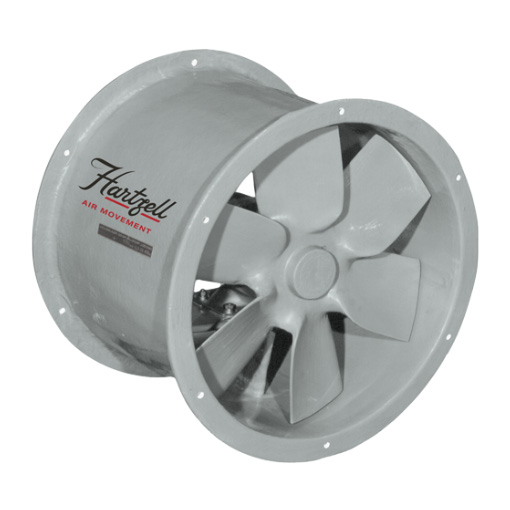
REQUEST QUOTE- AXIAL FANS
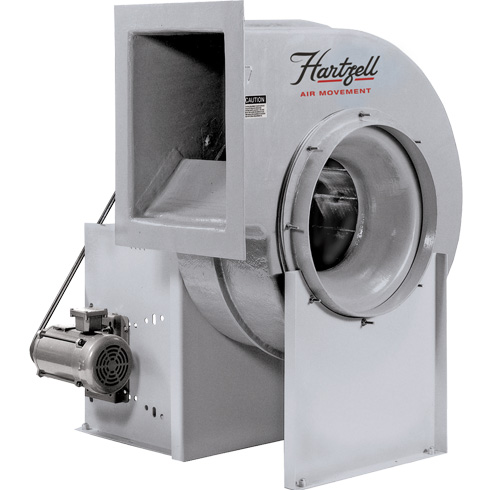
- CENTRIFUGAL FANS
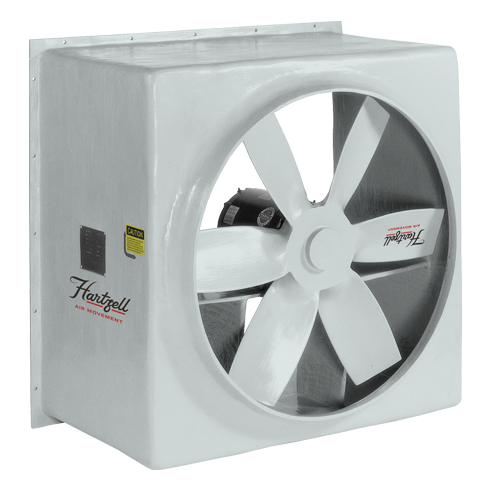
- VENTILATORS/EXHAUSTERS
| Brand | Model | Type | Material | Airflow | Static Pressure |
|---|---|---|---|---|---|
| Hartzell | Series 28/28B | Fiberglass Direct Drive Duct Fan. Bifurcated Fan Option | Fiberglass Reinforced Plastic (FRP) | Up to 66,000 CFM | Up to 1.25 in. WG |
| Hartzell | Series 29/29V | Direct Drive Fiberglass Axial Flow Fan / Vane Axial option | Fiberglass Reinforced Plastic (FRP) | Up to 68,000 CFM | Up to 4.5 in. WG |
| Hartzell | Series 34 | Fiberglass Belt Direct Drive Duct Fan | Fiberglass Reinforced Plastic (FRP) | Up to 63,000 CFM | Up to 1.25 in. WG |
| Hartzell | Series 35/35V | Fiberglass Axial Flow Fan, Vaneaxial option | Fiberglass Reinforced Plastic (FRP) | Up to 30,000 CFM | Up to 4.5 in. WG |
| Brand | Model | Type | Material | Airflow | Static Pressure |
|---|---|---|---|---|---|
| Hartzell | Series 40 | Fiberglass Inline Centrifugal Blowers Belt Drive | Fiberglass Reinforced Plastic (FRP) | Up to 90,000 CFM | Up to 12” WG |
| Hartzell | Series 41/41P/41U | Fiberglass Backward Curved Centrifugal Fan | Fiberglass Reinforced Plastic (FRP) | Up to 120,000 CFM | Up to 30” WG |
| Hartzell | Series 42 | Fiberglass Pressure Blower | Fiberglass Reinforced Plastic (FRP) | Up to 1,500 CFM | Up to 12” WG |
| Hartzell | Series 43 | Fiberglass Radial Blower | Fiberglass Reinforced Plastic (FRP) | Up to 11,500 CFM | Up to 16” WG |
| Brand | Model | Type | Material | Airflow | Static Pressure |
|---|---|---|---|---|---|
| Hartzell | Series 59 | Fiberglass Direct Drive Wall Ventilator | Fiberglass Reinforced Plastic (FRP) | Up to 56,000 CFM | Up to .5” Static Pressure |
| Hartzell | Series 37 | Fiberglass Roof Ventilation | Fiberglass Reinforced Plastic (FRP) | Up to 64,500 CFM | Up to 3” Static Pressure |
| Hartzell | Series 57 | Fiberglass Roof Ventilation | Fiberglass Reinforced Plastic (FRP) | Up to 51,000 CFM | Up to 3” Static Pressure |
| Hartzell | Series 58E | Fiberglass Roof Ventilation | Fiberglass Reinforced Plastic (FRP) | Up to 64,500 CFM | Up to 3” Static Pressure |
| Hartzell | Series 82 | Fiberglass Centrifugal Exhauster | Fiberglass Reinforced Plastic (FRP) | Up to 22,000 CFM | Up to 3” Static Pressure |
| Hartzell | Series 83 | Fiberglass Centrifugal Exhauster | Fiberglass Reinforced Plastic (FRP) | Up to 22,000 CFM | Up to 3” Static Pressure |
| Hartzell | Series 87 | Fiberglass Centrifugal Exhauster | Fiberglass Reinforced Plastic (FRP) | Up to 22,000 CFM | Up to 3” Static Pressure |
| Hartzell | Series 88 | Fiberglass Centrifugal Exhauster | Fiberglass Reinforced Plastic (FRP) | Up to 22,000 CFM | Up to 3” Static Pressure |
How Do FRP Fans Extend Equipment Life in Corrosive Environments?
Traditional metal fans can corrode rapidly when exposed to chemical vapors, moisture-heavy air, H2S, and acidic or alkaline gases. This corrosion creates three operational problems: premature equipment failure, contamination of process air, and frequent replacement costs that strain maintenance budgets. Selecting the correct material for your specific environment is the key to extending the life of your equipment.
Performance advantages in corrosive applications:
-
Non-metallic components eliminates rust and galvanic corrosion that causes metal fan degradation in chemical environments
- For metal parts, special corrosion resistant coatings can be applied
- Chemical-resistant matrix maintains structural integrity through repeated exposure to acids, bases, and salt spray
- Non-sparking operation enhances safety in volatile environments where metal fans could create ignition sources
- Sustained airflow performance with extended service life
Which FRP Fan Type Matches Your Specific Airflow Requirements?
Selecting the correct fan configuration depends on your static pressure requirements, airflow volume, available installation space, and specific application demands. JEPCO offers four primary FRP fan configurations, each engineered for distinct operational advantages.
Centrifugal FRP Fans
- Common installations include chemical fume exhaust, industrial scrubbers, and process ventilation
- Typical static pressure range: 1-30 inches water column
- Ideal for systems with extensive ductwork and high resistance
Axial FRP Fans
- Best for high-volume, low-pressure applications
- Energy-efficient operation reduces long-term costs
- Suitable for cooling towers and direct air exchange systems
Inline Centrifugal FRP Fans
- Delivers centrifugal performance in confined spaces
- Works well for a higher static pressure with an axial fan shape
- Mounts directly in ductwork without external housing
Roof Exhaust/Supply FRP Fans
- Can supply outside fresh air or exhaust air out of a building
- Mounts to the roof of a building
Wall Exhaust/Supply FRP Fans
- Can supply outside fresh air or exhaust air out of a building
- Mounts to the wall
Frequently Asked Questions
How long do FRP fans typically last compared to stainless steel in chemical processing applications?
FRP fans generally outlast stainless steel alternatives in environments with aggressive chemical exposure. While stainless steel can provide corrosion resistance in some environments, it remains vulnerable to specific chemicals that can cause pitting and stress corrosion cracking. FRP’s composite matrix resists a broader range of chemical attacks with minimal degradation. Actual service life depends on specific chemical exposures, operating conditions, and maintenance practices.
Can JEPCO match our existing static pressure and airflow specifications with FRP construction?
Yes. JEPCO manufactures FRP fans across a comprehensive range of sizes and performance capabilities, and we will do our best to find the best fit for you. Our manufacturers engineer systems that meet specific static pressure requirements from under 1 inch through 30+ inches of water column, with airflow capacities ranging from hundreds to tens of thousands of CFM. Special blade designs, housing configurations, and motor selections ensure your FRP fan delivers the precise performance your application requires. During the specification process, we analyze your system requirements and provide performance curves that demonstrate compliance with your airflow and pressure parameters.
Which industries rely on FRP fans for critical operations?
Wastewater treatment facilities represent the largest user segment, deploying FRP fans for scrubber exhaust, odor control systems, and wet well ventilation. Semiconductor manufacturing cleanrooms require FRP fans for chemical vapor deposition tool exhaust and acid waste ventilation. Chemical processing plants use FRP fans throughout their operations wherever corrosive gases or vapors require air handling. Food and beverage facilities specify FRP fans for washdown areas and sanitation zones where moisture and cleaning chemical exposure would corrode metal alternatives. Laboratory ventilation systems, plating operations, and pharmaceutical manufacturing also commonly deploy FRP fan technology for fume hood exhaust and process ventilation.
Does JEPCO provide custom engineering for unique installation requirements?
JEPCO’s engineering capabilities extend beyond standard catalog products. We routinely customize motor specifications, airflow parameters, housing dimensions, connection flanges, and material formulations to match specific application requirements. Custom projects receive the same engineering analysis and performance verification as standard designs, with detailed drawings, performance curves, and technical documentation supporting installation and operation. The customization process begins with understanding your operational requirements, space constraints, and integration needs. Our team then develops solutions that address those specific challenges while maintaining the performance and reliability advantages of engineered FRP construction.
Are FRP fans spark resistant or explosion proof?
FRP fans are not inherently explosion-proof, but can be designed with specific coatings and construction to reduce static buildup in dangerous environments. Spark resistance prevents sparks from the airstream itself, while explosion-proof electrical components contain any sparks from the motor and wiring to prevent an external explosion.
Get Expert FRP Fan Selection Support for Your Corrosive Air Handling Application
Share your airflow requirements, chemical exposure conditions, and integration constraints. We’ll provide specific fan recommendations, performance documentation, and delivery timelines that support your project planning and budget approval processes.