Overview Summary
- Paint booth ventilation directly impacts finish quality, throughput, and uptime, not just air quality
- Airflow consistency is critical across industries including aerospace, furniture, heavy equipment, rail, and marine
- Fan selection mismatches and gradual performance drift are among the most common hidden causes of booth downtime
- NFPA 33 compliance depends on ventilation systems that maintain adequate airflow under real operating conditions
- Proactive monitoring of fan output, static pressure, and filter loading helps prevent costly production interruptions
Paint Booths Are Production Systems, Not Safety Fixtures
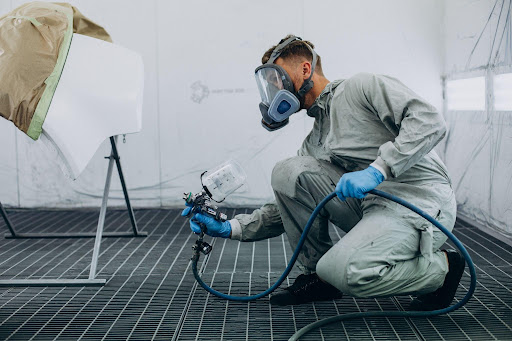 In any coating operation, the paint booth directly affects product quality, throughput, and maintenance costs. When ventilation performs properly, the booth fades into the background. When airflow begins to drift out of spec, the impact shows up quickly through rework, finish defects, longer cycle times, and rising maintenance demands.
A paint booth is not simply a safety enclosure. It is a production system, and the ventilation fan is what keeps that system operating correctly.
Proper airflow supports several critical functions:
- Overspray removal to protect finished surfaces
- Contamination control to keep dust and particulates out of wet coatings
- VOC exhaust for safer operating conditions
- Stable temperature and humidity for proper adhesion and curing
- Clear operator visibility during application
All of these rely on consistent airflow. When fan performance declines, every aspect of booth performance suffers.
Industries That Depend on Paint Booth Ventilation
Paint booth ventilation requirements vary by industry, but the challenge remains the same: airflow must match the application, coating materials, and operating environment.
Aerospace and Defense
Aerospace finishing operations require strict contamination control and consistent coating quality. Downdraft booth designs are common because they provide controlled airflow from ceiling to floor, helping maintain clean finishes. These systems require high airflow volumes and place significant demands on fan performance.
Wood Products and Furniture Manufacturing
Wood finishing operations generate both fine dust and solvent vapors. Overspray buildup on fan blades is common, gradually reducing airflow and increasing vibration. If buildup is not addressed, airflow loss can eventually lead to mechanical failure.
Heavy Equipment and Agricultural Machinery
Large-part finishing operations require substantial exhaust capacity due to the volume of coating material applied. Filter loading can increase static pressure quickly, making it critical for fans to maintain airflow under changing system conditions.
Rail, Marine, and Specialty Coatings
Rail and marine coating systems often use high-build and anti-corrosion coatings that create heavy VOC loads. Ventilation systems must withstand chemically aggressive airstreams while maintaining reliable overspray removal. Improper fan selection in these environments can lead to premature corrosion and declining performance.
Automotive Refinish and Production Finishing
Automotive finishing operations depend on booth-to-booth consistency. Even small airflow variations can affect finish quality. These systems are especially sensitive to airflow loss, as their filter load and system resistance increases.
What Airflow Failure Actually Looks Like
Paint booth ventilation problems usually develop gradually, not suddenly. Performance drifts over time due to filter loading, blade buildup, belt wear, or improperly matched equipment.
Common warning signs include:
- Uneven finishes or recurring surface defects
- Increased rework and longer production cycles
- Overspray buildup on booth surfaces and ductwork
- Longer drying or curing times
- Reduced operator visibility or haze in the booth
- Rising motor amperage
- More frequent filter replacement intervals
These issues increase labor, material usage, and maintenance costs. In facilities operating under NFPA 33 requirements, reduced airflow may also create compliance concerns.
The Fan Is Often the Root Cause
Many paint booth ventilation issues trace back to the fan itself, whether from improper selection, gradual performance drift, or poorly evaluated replacements.
Mismatched Fan Selection
Fans designed for general ventilation may not perform adequately in paint booth applications with loaded filters and solvent-laden airflow. Proper fan type, wheel design, pressure capability, and material compatibility all matter. A correctly selected centrifugal fan will maintain airflow more effectively as system resistance increases.
Gradual Performance Drift
Overspray and particulate buildup slowly alter fan blade profiles, reducing airflow and increasing imbalance. Over time, this accelerates bearing wear and vibration while quietly reducing booth performance.
Improper “Drop-In” Replacements
Replacing a failed fan using only nameplate information can create performance problems if the system operating conditions have changed. Duct modifications, filter upgrades, or booth changes may shift the system curve enough that a direct replacement no longer delivers the required airflow.
A Practical Approach to Maintaining Booth Performance
Maintaining paint booth ventilation requires treating airflow as part of the production maintenance strategy, not as a background utility system.
Best practices include:
- Document required CFM and static pressure targets
- Monitor fan vibration, amperage, and airflow trends
- Inspect fan blades regularly for buildup and imbalance
- Track filter static pressure to identify airflow decline early
- Verify actual system conditions before replacing equipment
- Work with ventilation specialists familiar with paint booth applications
How J.E. Phillips Supports Paint Booth Ventilation
J.E. Phillips Co., Inc. works with maintenance managers, engineers, and operations teams to evaluate paint booth ventilation systems based on real-world operating conditions. That includes reviewing airflow requirements, pressure curves, airstream chemistry, duty cycles, and compliance considerations specific to the application.
When ventilation systems are properly matched and maintained, facilities benefit from more consistent finish quality, reduced downtime, lower maintenance costs, and smoother production throughput.
Keep Your Booth Running at Spec
If your facility is dealing with recurring finish quality issues, unexplained downtime, or inconsistent booth performance, the ventilation system is often where the answer is found. Contact J.E. Phillips Co, Inc. to discuss your application and ensure your paint booth airflow is supporting your production goals — not quietly working against them.