Direct Drive Industrial Fans for Continuous-Duty Applications
Belt maintenance creates recurring labor costs and unplanned downtime that disrupts production schedules. J.E. Phillips Co., Inc. (JEPCO’s) direct drive industrial fans eliminate belt-related maintenance requirements while delivering superior energy efficiency for continuous-duty applications. The direct motor-to-impeller connection reduces moving parts, simplifies maintenance protocols, and provides measurable operational cost reductions in OEM equipment, cleanroom environments, and process ventilation systems.
Key Benefits: Elimination of belt maintenance and alignment labor, enhanced energy efficiency reducing operational costs, compact design for space-constrained installations, reduced unplanned downtime from belt failures.
- CFM: capacities up to 100,000 CFM
- Static Pressure: up to 18″ WG
- Fan Size: 12″ to 60″
- Belt Drive, Direct Drive
- Material Type: Steel, 304 SST, 316 SST, Alum, Marine, Fiberglass
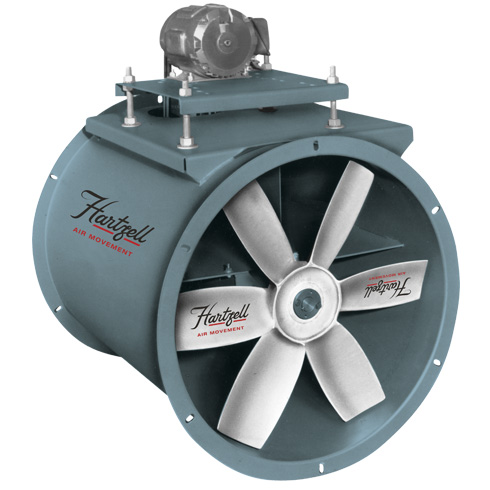
- HARTZELL
- CINCINNATI FAN
- IAP
- DANIELS FANS
- PDF DOWNLOADS
| Model | Type | Material | Airflow | Static Pressure |
|---|---|---|---|---|
| Series 38/38S | Axial Duct Fan, Roof Ventilator, Swingout | Carbon Steel, Stainless Steel, Aluminum, Hot Dip Galvanized | Up to 45,000 CFM | Up to 1.25” WG |
| Series 39 (S,V) | Adjustable Pitch Duct, Swingout and Vane Section | Carbon Steel, Stainless Steel, Aluminum, Hot Dip Galvanized | Up to 59,000 CFM | Up to 2.5” WG |
| Series 44 (V) | Special Duty Duct Axial, Vane Section | Carbon Steel, Stainless Steel, Aluminum, Hot Dip Galvanized | Up to 92,000 CFM | Up to 4” WG |
| Series 48 (V) | Duct Axial, Vane Section | Carbon Steel, Stainless Steel, Aluminum, Hot Dip Galvanized | Up to 68,000 CFM | Up to 4.5” WG |
| Series 50 | Special Duty Vane Axial | Carbon Steel, Stainless Steel, Hot Dip Galvanized | Up to 113,000 CFM | Up to 5” WG |
| Series 52 | Tubeaxial Fan | Carbon Steel, Stainless Steel, Hot Dip Galvanized | Up to 12,000 CFM | Up to 6” WG |
| Series 53C | Vaneaxial, C-Faced Motor | Carbon Steel, Stainless Steel, Hot Dip Galvanized | Up to 108,000 CFM | Up to 5” WG |
| Series 03 (P,U,M) | Centrifugal, Backward Inclined, Backward Curved, Airfoil | Steel, Stainless Steel, AMCA A, AMCA B, AMCA C | Up to 169,500 CFM | Up to 20” WG |
| Series 05 (F) | Centrifugal, Backward Inclined | Steel, Stainless Steel, AMCA A, AMCA B, AMCA C | Up to 46,000 CFM | Up to 46” WG |
| Series 07/07T | Pressure Blower, Radial Centrifugal, Turbo Pressure Blower | Steel, Stainless Steel, AMCA A, AMCA B | Up to 1,600 CFM | Up to 60” WG |
| Series 12 | Plug Fan, Backward Curve | Steel, Stainless Steel, AMCA A, AMCA B, AMCA C | Up to 327,000 CFM | Up to 0.625” WG |
| Series 41 (P, U) | Airfoil Blades with Backward Curved Design, Backward Inclined | Fiberglass | Up to 120,000 CFM | Up to 30” WG |
| Series 42 | Radial Centrifugal | Fiberglass | Up to 1,500 CFM | Up to 12” WG |
Please contact us for details on our full backward curved fan selection, additional models are available!
| Model | Type | Material | Airflow | Static Pressure |
|---|---|---|---|---|
| Model DDF | Direct Drive Centrifugal Fan | Carbon Steel, Stainless Steel, Aluminum | 500 to 40,000 CFM | Up to 8 in. WG |
| Model SQBI | Backward Inclined Square Fan | Carbon Steel, Stainless Steel, Aluminum | 700 to 85,000 CFM | Up to 10 in. WG |
| Model CPF | Backward Inclined Plug Fan | Carbon Steel, Stainless Steel, Aluminum | 500 to 70,000 CFM | Up to 8 in. WG |
| Model PF | High Pressure Centrifugal Fan | Carbon Steel, Stainless Steel, Aluminum | 600 to 50,000 CFM | Up to 18 in. WG |
| Model AC | Direct Drive Air Curtain Fan | Carbon Steel, Stainless Steel, Aluminum | 1,000 to 30,000 CFM | Up to 6 in. WG |
Please contact us for details on our full backward curved fan selection, additional models are available!
| Model | Type | Material | Airflow | Static Pressure |
|---|---|---|---|---|
| Model DDF | Direct Drive Centrifugal Fan | Carbon Steel, Stainless Steel, Aluminum | 500 to 40,000 CFM | Up to 8 in. WG |
| Model DDV | Direct Drive Vaneaxial Fan | Carbon Steel, Stainless Steel, Aluminum | 1,000 to 60,000 CFM | Up to 6 in. WG |
| Model DP | Direct Drive Plug Fan | Carbon Steel, Stainless Steel, Aluminum | 700 to 50,000 CFM | Up to 7 in. WG |
| Model DCF | Direct Drive Centrifugal Fan | Carbon Steel, Stainless Steel, Aluminum | 500 to 45,000 CFM | Up to 9 in. WG |
| Model DHF | Direct Drive High Pressure Fan | Carbon Steel, Stainless Steel, Aluminum | 300 to 35,000 CFM | Up to 18 in. WG |
Please contact us for details on our full backward curved fan selection, additional models are available!
| Model | Type | Material | Airflow | Static Pressure |
|---|---|---|---|---|
| Model AFP | Direct Drive Axial Fan | Carbon Steel, Stainless Steel, Aluminum | 1,000 to 90,000 CFM | Up to 6 in. WG |
| Model MFC | Direct Drive Centrifugal Fan | Carbon Steel, Stainless Steel, Aluminum | 500 to 80,000 CFM | Up to 10 in. WG |
| Model OPB | Direct Drive Open Paddle Wheel Centrifugal Fan | Carbon Steel, Stainless Steel, Aluminum | 600 to 75,000 CFM | Up to 12 in. WG |
| Model BIF | Direct Drive Backward Inclined Centrifugal Fan | Carbon Steel, Stainless Steel, Aluminum | 1,200 to 95,000 CFM | Up to 14 in. WG |
Please contact us for details on our full backward curved fan selection, additional models are available!
How Do Direct Drive Fans Reduce Maintenance Costs and Operational Downtime?
Belt drive systems require ongoing maintenance that creates both planned and unplanned costs. JEPCO’s manufacturer made direct drive fans eliminate these maintenance mechanisms entirely. The motor shaft connects directly to the fan impeller without belts, pulleys, or tensioning systems. This direct connection removes the components that require regular inspection, adjustment, and replacement in belt drive configurations.
Maintenance advantages of direct drive design:
- Zero belt replacement costs eliminate recurring material and labor expenses
- No belt tension monitoring removes a regular inspection requirement from maintenance schedules
- Eliminated alignment procedures reduce skilled labor time for ongoing maintenance
- Reduced unplanned downtime from belt failure mechanisms that create emergency service calls
Facilities operating continuous-duty ventilation systems report significant maintenance labor reductions after transitioning from belt drive to direct drive configurations. The simplified maintenance requirements allow maintenance teams to focus resources on other critical equipment rather than routine belt service.
What Energy Efficiency Advantages Do Direct Drive Fans Provide?
Direct drive configurations transfer motor power directly to the fan impeller without the energy losses inherent in belt drive systems. This direct power transmission improves overall system efficiency and reduces operational energy consumption.
Energy efficiency mechanisms in direct drive systems:
- Direct power transmission eliminates belt friction losses and improves motor-to-airflow efficiency
- Optimized motor selection matches motor characteristics precisely to fan requirements without pulley ratio compromises
- Reduced parasitic losses from eliminated belts, pulleys, and bearing systems
- Consistent performance without efficiency degradation from belt wear and tension loss
How Do Direct Drive Fans Integrate with Existing Ventilation Infrastructure?
Direct drive fans mount to standard duct connections and adapt to conventional ventilation systems, but the compact configuration and motor positioning differ from belt drive alternatives. Understanding these integration factors during specification prevents installation complications.
Motor positioning affects installation planning and environmental protection. Direct drive configurations position the motor in-line with the airflow path. For clean air applications, this presents no concerns. Applications with contaminated airstreams, high temperatures, or corrosive conditions require motor protection strategies.
Space requirements differ from belt drive configurations. Direct drive fans eliminate the external motor and belt system that extends beyond the fan housing in belt drive designs. This compact footprint benefits space-constrained installations and OEM equipment integration. However, the in-line motor positioning may affect access for maintenance or motor replacement in certain installations.
Electrical requirements must match available power infrastructure:
- Motor voltage and phase must align with facility electrical systems
- Starter and overload protection requirements depend on motor horsepower
- Variable frequency drive compatibility enables speed control when operational needs require adjustment
- Control integration capabilities allow connection to building automation or process control systems
Mounting and vibration isolation follow standard industrial fan practices. Direct drive configurations often produce lower vibration levels than belt drive alternatives due to eliminated belt-induced forces. Standard vibration isolators and proper foundation mounting ensure quiet operation and extended bearing life.
How Do You Select the Right Direct Drive Series for Your Application?
JEPCO partners with leading manufacturers to provide comprehensive direct drive fan options across diverse performance requirements. With 13+ series available, understanding selection criteria helps match equipment capabilities to your specific operational needs.
Selection factors that determine optimal series choice:
Airflow volume requirements drive initial series selection. Applications range from compact OEM equipment needing hundreds of CFM through large industrial ventilation systems requiring tens of thousands of CFM. Your required air volume narrows suitable series options significantly.
Static pressure capabilities must overcome ductwork resistance and system losses. Low-pressure applications (under 2″ WG) suit axial and vane axial configurations. Moderate pressure systems (2-6″ WG) require centrifugal designs. High-pressure applications (6″+ WG) need specialized centrifugal configurations with backward-inclined or curved blades.
Fan type and installation configuration depends on your space constraints and system layout:
- Axial duct fans provide inline installation for straightforward ductwork integration with low to moderate pressure requirements
- Vaneaxial and tubeaxial fans deliver higher efficiency in axial configurations through optimized blade and vane designs
- Centrifugal fans generate higher static pressures for complex duct systems with multiple branches and discharge points
- Pressure blowers handle specialized high-pressure applications including material conveying
Material construction addresses environmental conditions:
- Carbon steel (standard across most series) suits general industrial applications with ambient conditions
- Stainless steel (available across series) provides corrosion resistance for food processing, pharmaceutical, and washdown environments
- Aluminum reduces weight for OEM equipment and rooftop installations
- Hot-dip galvanized delivers long-term corrosion protection for outdoor installations
- Fiberglass handles corrosive chemical environments that attack metallic constructions
Motor protection requirements depend on airstream characteristics. TEFC (Totally Enclosed Fan Cooled) motors protect against dust, moisture, and light contamination while maintaining cooling through external fins. Applications with clean ambient air may use standard open drip-proof motors. Severe environments may require motor isolation outside the airstream.
The specification table on this page provides detailed performance ranges by series. For application-specific selection guidance, JEPCO’s engineering team analyzes your airflow requirements, system characteristics, and environmental conditions to recommend optimal configurations.
Frequently Asked Questions About Direct Drive Industrial Fans
How much maintenance time do direct drive fans actually save compared to belt drive systems?
The maintenance time savings depend on your current belt service protocols and system configuration. A typical belt drive fan requires 1-2 hours annually for belt replacement, plus quarterly inspections taking 15-30 minutes each. Multiple-belt systems or difficult-access installations increase these time requirements. Direct drive fans eliminate all belt-related service, redirecting those labor hours to other equipment. For facilities operating multiple fans, the cumulative savings become substantial. The elimination of emergency belt failure responses provides additional value by preventing unplanned maintenance calls and production disruptions.
Do direct drive fans really operate more quietly than belt drive configurations?
Direct drive fans typically generate lower vibration and noise levels than belt drive alternatives. Belt drives create vibration from belt imbalance, pulley eccentricity, and varying belt tension. These vibrations transmit through the fan structure and connected ductwork. Direct drive configurations eliminate these belt-induced vibration sources, resulting in smoother operation. The actual noise difference depends on installation specifics, duct configuration, and airflow velocity, but facilities commonly report noticeably quieter operation after direct drive upgrades. Proper balancing and quality bearings in direct drive fans further minimize operational noise.
Can I adjust airflow with direct drive fans if my process requirements change?
Direct drive fans offer less speed flexibility than belt drive systems but accommodate operational adjustments through several methods. Variable frequency drives provide electronic speed control, allowing precise airflow adjustment without mechanical modifications. VFD installation adds upfront cost but delivers operational flexibility comparable to belt drive systems with improved energy efficiency at reduced speeds. For applications without VFD investment, fixed-speed direct drive fans deliver consistent performance at design conditions. If your operations require frequent airflow changes or process optimization through speed adjustment, discuss VFD options during specification to maintain operational flexibility.
What motor protection do I need if the motor sits in the airstream?
Motor protection requirements depend on your airstream characteristics. Clean, ambient-temperature air requires minimal protection—standard open drip-proof motors perform reliably. Contaminated airstreams need TEFC motors that seal internal components from dust, moisture, and light contamination while maintaining cooling through external fins. Corrosive environments, high temperatures above 104°F, or severe contamination may require motor isolation outside the airstream or specialized motor enclosures. During specification, share your environmental conditions—temperature ranges, humidity levels, contaminant types—so our engineering team can recommend appropriate motor protection that ensures reliable long-term operation.
What’s the delivery timeline for direct drive fans?
Standard direct drive fan configurations typically ship within 2-3 weeks of order placement, depending on motor and housing availability. Custom-engineered systems require additional lead time for design verification and fabrication, generally 4-6 weeks from final specification approval. We provide firm delivery commitments during quotation and maintain communication throughout manufacturing. For projects with critical timeline requirements, we work to identify potential expediting options or interim solutions. Our production planning coordinates with your project schedule to ensure equipment arrives when needed and prevents project delays.
Specify Direct Drive Fans That Match Your Application Requirements
Determining whether direct drive configuration provides optimal value for your specific application requires evaluating your operational priorities, maintenance resources, and performance requirements. JEPCO’s engineering team analyzes your airflow specifications, environmental conditions, and integration constraints to recommend solutions that deliver measurable operational improvements.
Request a technical consultation and project quote: Share your current fan specifications, operational challenges, and performance objectives. We’ll provide direct drive recommendations with performance documentation, maintenance comparison analysis, and delivery timelines that support your evaluation and budget approval processes.